A burner kept going out under a big pot. He measured the gas pressure at the manifold, found it low, and traced it to a partly closed valve behind the range from a remodel. He set it right and rechecked every burner under load.
Parts and age
Keeping a twenty-five-year-old range running
Burners, valves, hinges and thermostats stay available for decades. Electronics do not. Test the board first, then decide, and you will not put good money into a machine with no future.
An older appliance is worth keeping while its parts are still made. That question has a checkable answer, not an opinion.
Article
Keeping a twenty-five-year-old range running
Built to be repaired
Viking put the first professional-style range into a residential kitchen in 1987, and the format it established was commercial construction scaled for the home: welded frame, cast iron grates, sealed high-output burners, individually replaceable valves, and a door heavy enough that hinges became a wear item.
The reason that matters twenty-five years later is that everything on that list is a serviceable assembly. Burners come apart. Valves unbolt from the manifold one at a time. Hinges are through-bolted. Nothing important is potted, glued or moulded into a single non-serviceable module.
A mass-market range from the same era is a stamped box. A professional range from the same era is a machine, and machines get fixed.
The one thing that ends a repair
Electronics.
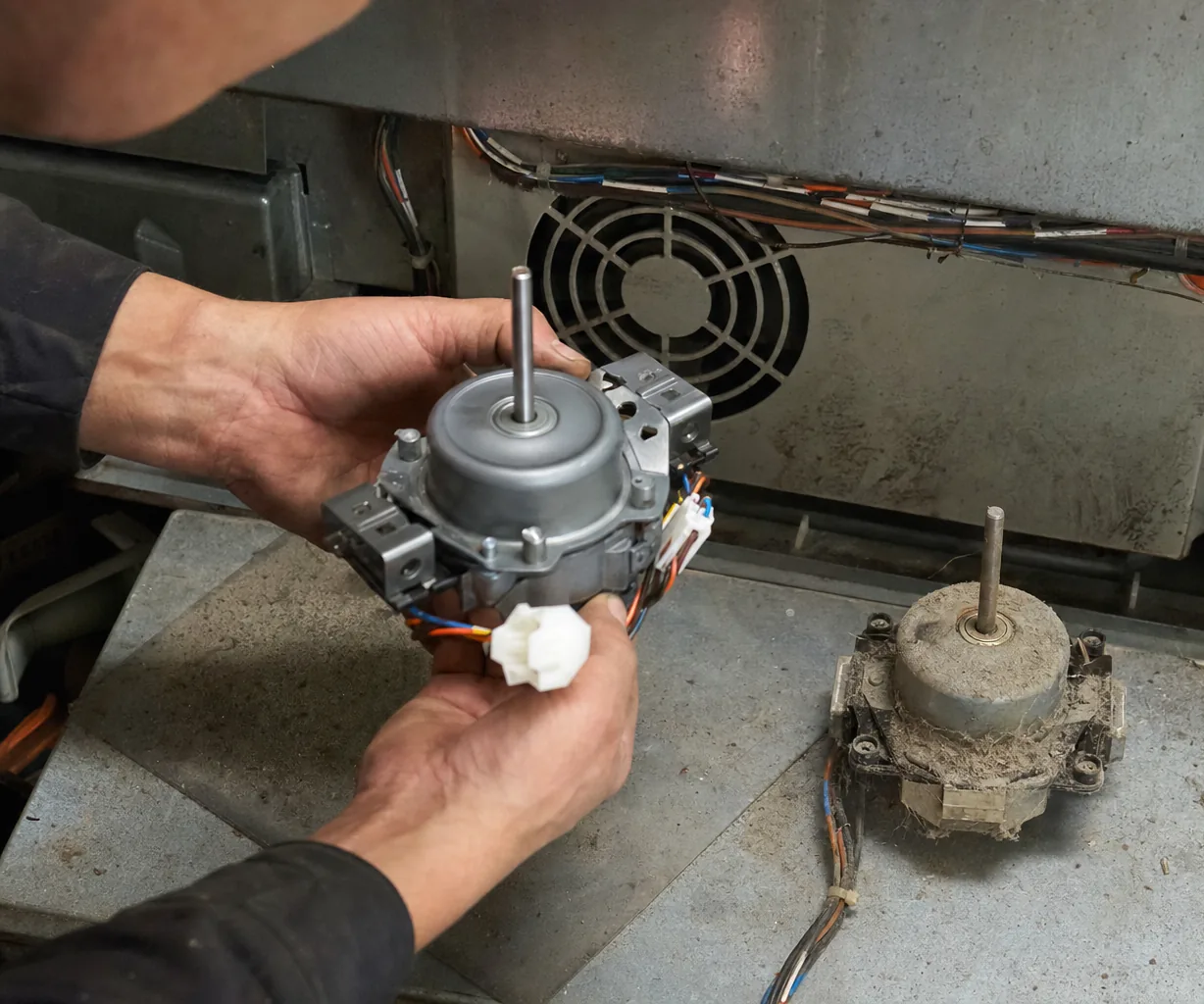
Mechanical parts for older professional ranges stay in supply for a long time, either as original stock, as OEM supersessions, or as parts shared across model generations. Burners, orifices, valves, igniter electrodes, spark modules, hinges, springs, door gaskets, oven sensors, elements, thermostats and fan motors are all commonly obtainable for machines well over twenty years old.
Electronic control boards are not. They go obsolete, they get superseded by a version needing a different harness, and eventually they are simply gone.
So the sequence on any older machine is fixed: test the board first, then quote everything else. There is no sense fitting six hundred dollars of mechanical parts to a range whose control is unobtainable. We check availability before we quote, and if the answer is that the board has no future we will say so and you can decide with real information.
That is the honest advantage of an independent shop. Nobody upstream of us benefits from you buying a new range.
Who makes the parts now
Worth knowing, because it affects the conversation with parts suppliers. Viking is part of the Composition Brands portfolio, which also includes AGA, Rangemaster, La Cornue, Lynx, Marvel and U-Line, following the transfer of Middleby’s residential kitchen business to affiliates of 26North.
If you are reading appliance advice that still describes Viking as a Middleby brand, the content is stale. That is a useful tell for judging how current the rest of the advice is.
We are an independent shop and we buy genuine OEM parts through normal supply channels.
What we replace most on older machines
Hinges. The number one older-range repair. Springs settle under the weight of the door, the door drops at the front edge, the gasket loses contact along the top, and the oven starts losing heat out of the corner. Owners blame the thermostat. Hinges always go in as a pair, because fitting one twists the door.
Oven sensors. Resistance curves drift with age. A uniform temperature offset, stable across the whole cycle, is a sensor until proven otherwise.
Igniter electrodes. Ceramic cracks from thermal shock, usually cold water on a hot burner. A cracked electrode shorts the spark to the burner body and, because the module fires every electrode at once, makes the whole cooktop tick.
Valve grease. After two decades of heat cycles the high-temperature grease in a burner valve has dried out and the knob goes gritty, then stiff. Serviceable valves can be pulled, cleaned and re-greased rather than replaced.
Door gaskets. They harden, they compress permanently, and they stop sealing. Cheap, quick, and often the actual cause of a temperature complaint that three technicians have already blamed on something expensive.
Is it worth it?
Our test is simple. Are the parts obtainable, and does the repair cost meaningfully less than replacing the appliance and, in a built-in installation, the joinery around it? If both answers are yes, fix it. A professional range with fresh hinges, a good gasket, clean burners and a working board has years of service left, and it will outlast most of what you could buy to replace it.
Questions
Follow-ups
Who owns Viking now?
Viking sits in the Composition Brands portfolio, alongside AGA, Rangemaster, La Cornue, Lynx, Marvel and U-Line, following the transfer of Middleby's residential kitchen business to affiliates of 26North. Anything still describing Viking as a Middleby brand is out of date.
Do you have a minimum age where you stop working on a machine?
No. We have an availability test, not an age test. If the parts a machine needs are obtainable and the repair makes economic sense against what it would cost to replace, it is worth doing.
Price Bands
What does a repair cost, band by band?
Parts and labour together, in the bands these jobs land in. The $80 diagnostic comes off the bill when you approve the work, and the firm figure is written down after the fault is proved.
| Work | Typical range |
|---|---|
| Diagnostic visit | $80 |
| Igniter or burner assembly | $200–$570 |
| Control board or touch panel | $390–$930 |
| Oven thermostat or heating element | $190–$550 |
If This Is Your Problem
The appliances this affects
Sealed burners, spark modules, oven temperature drift and the door hinges that carry a 40-pound door. 30, 36, 48 and 60 inch ranges, gas and dual fuel.
Drop-in rangetops in 30, 36, 48 and 60 inch widths. Burner and valve work, simmer faults, griddle and grill module repair, and the counter cut-out problems nobody warned you about.
Single, double and combination wall ovens. Temperature drift, element and sensor faults, hinge and gasket wear, and control boards killed by power events.
Where It Bites
Areas where this one matters most
These are the service-area pages that turn on this problem. Each one carries its own published figures rather than repeating this article.
1970s to 1990s housing that has mostly been remodelled once, which means newer appliances in older openings and a lot of equipment now past the twenty year mark.
Keep Reading
Next article
Uniform offset, overshoot and sag, slow preheat and long-bake heat loss are four different faults with four different parts behind them. Separating them before quoting is most of the job.
The three things that go wrong when a modern professional range meets a hundred-year-old kitchen: the opening is undersized, there is no dedicated 20A circuit, and the floor is no longer level.
Customer Comments
What customers said afterwards
4.8 out of 5, across 90 customer reviews. Every one is a single visit, in the words of the person whose kitchen it happened in.
The griddle section never came up to temperature and the burner under it roared. He found a cracked igniter and a warped baffle, changed both and reset the airflow. It cooks flat across the plate again.
Our range would not hold a low flame and scorched everything in a heavy pan. He stripped and soaked the burner caps, cleared two ports and reset the air shutters. It simmers again without cutting out.
Next Step
Book a diagnostic
Give us the model number and what it is doing. We quote in writing before anything comes apart.
- $80 diagnostic, credited
- 90-day labor
- 365-day parts
- Mon-Fri 8am-6pm. Sat 9am-4pm. Closed Sunday.