Nothing was coming clean on the top rack. He flushed the spray arms jet by jet, found two blocked solid, and showed us how the machine was being loaded in a way that starved the feed.
Dishwashers
Viking dishwasher repair
Panel-ready and stainless dishwashers. Drain and fill faults, heater and relay failures, blocked spray arms, door spring and cable wear, and boards after power events.
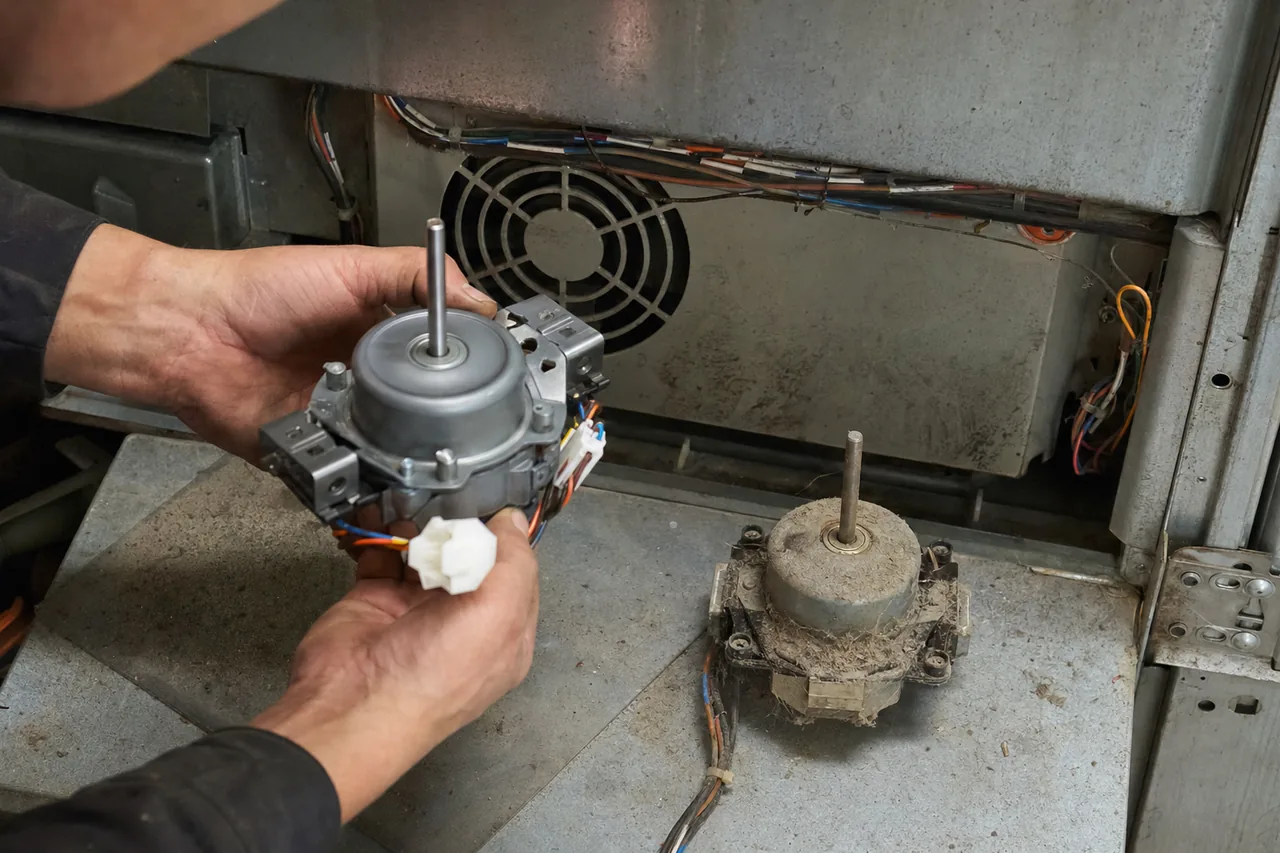
Circulation, drainage, heat and the door seal are the four things that can be wrong. Each is tested before a part is ordered.
Symptoms
What you are seeing, and what it usually is
Described from the owner's side. No invented error codes. Where the cause is not certain, what gets checked is listed rather than guessed at.
| Observed | Usually | The work |
|---|---|---|
| Dishes come out gritty or filmed white | A rinse that never reaches temperature, a detergent and rinse aid regime that does not suit the load, or upper jets no longer clearing the glassware. | Time a full cycle to prove the heater holds temperature, flush the arms jet by jet, and set a regime that matches how the machine is actually loaded. |
| Top rack not cleaning | Blocked upper spray arm jets or a split feed tube. The small jets on the upper arm are always the first to plug. | Remove and flush the arm, check the feed tube seal, verify pressure with the arm off. |
| Water left in the bottom at the end of a cycle | Drain pump obstruction, a blocked filter, or a high loop that has been knocked down under the sink. | Clear the sump and filter, test the pump, verify the drain hose route and the air gap. |
| Cycle takes hours and dishes come out cold | Heater element or heater relay failure. The control extends the cycle while it waits for a temperature it will never reach. | Measure element resistance, check the relay on the board, replace the failed part and time a full cycle. |
| Door drops open or is heavy to lift | Broken door spring or a frayed door cable over the pulley. Normal wear, worse on panel-ready doors carrying a cabinet front. | Replace springs and cables as a set, re-tension both sides evenly. |
| Dead panel, no lights | Control board or the door interlock switch. Boards fail after power events, which are routine in a metro with about 68 thunderstorm days a year. | Check supply, test the interlock, inspect the board, replace and advise on surge protection. |
| Leak at the bottom of the door | Hardened door gasket or a warped panel-ready door pulling the seal away at one corner. | Replace the gasket, reset the door alignment, run a full cycle with the machine on paper to confirm. |
Price Bands
What does a dishwashers repair cost?
Parts and labour together, in the bands these jobs land in. The $80 diagnostic comes off the bill when you approve the work, and the firm figure is written down after the fault is proved.
| Work | Typical range |
|---|---|
| Diagnostic visit | $80 |
| Control board or touch panel | $390–$930 |
| Dishwasher pump or control | $230–$720 |
Detail
How we approach it
The order a dishwasher gets diagnosed
Almost every dishwasher complaint arrives as one of three sentences: it does not clean, it does not drain, or it takes forever. Each has a check order, and following it is the difference between a part that fixes the fault and one fitted on a guess.
It does not clean. Flow first, chemistry second, parts third. A short cycle, door open thirty seconds in, shows whether both arms turn under real pressure. If they do, the pump and motor are fine and the fault is downstream: plugged jets, a split feed tube, an unrinsed filter, or a tall item stopping the arm. If they do not, the sump, filter and pump come first.
It does not drain. Standing water at the end of a cycle is a drain problem four times out of five and a pump the fifth. Filter, sump, hose loop, air gap, then pump — in that order, because the first two are free and the last one is not.
It takes forever. A cycle that stretches and finishes cold is the control waiting for a rinse temperature it is never going to see. That is the heater or its relay, and it is measurable rather than debatable.
What a proper clean-out actually involves
When the machine is the problem, the work is worth describing, because “we cleaned it” covers everything from a rinse to a real service.
The arms come out and get cleared jet by jet, not flushed and hoped over. The sump and filter are stripped. The element is checked for resistance and for anything baked onto the sheath: a coated element still draws current and still cannot put heat into the water. Then a full timed cycle proves the rinse temperature actually arrives.
The interval to repeat it at follows from what came out of the machine: a house running two heavy cycles a day is on a different schedule from one running three a week.
Genuine mechanical failures
Drain. Filter, sump, hose loop, air gap, then pump, in that order. Plumbers get called for this constantly when a filter clean would have done it.
Heater. A cold, endless cycle is a dead element or a failed relay on the board, the control waiting for a rinse temperature it never gets.
Door. Springs and cables counterbalance the door for a specific weight, which on a panel-ready machine includes your cabinet front. A frayed cable or a relaxed spring drops it. Both sides go in together so the balance stays even.
Boards. About 68 thunderstorm days a year here. A dead panel after a storm week is a board or an interlock, and a whole-house or panel-level surge device is worth more than the repair.
Access. It comes out on its own feet, but supply, drain and power are all behind or under it, and a panel-ready cabinet front has to come off first. Wood and stone floors get protected before anything moves.
The one thing worth saying about the water
Tap water here is mineral-rich, and a machine that heats and evaporates it several times a week shows it — film on glassware, narrowed jets, deposit baked onto the element. Clearing that is part of the repair when we find it. We do not sell or fit water treatment, so there is nothing in that advice for us.
What to check before you call
Three things you can do in five minutes that occasionally save you a visit.
Pull the filter out of the sump and look at it. On a machine that has never had the filter cleaned, the mesh can be solid enough to stop the drain on its own, and the fix is a rinse under the tap.
Then run a short cycle and open the door thirty seconds in. Arms turning and water hitting the top rack means the pump and motor are fine. Arms not turning points at a different set of parts, so note it when you book.
Finally, look under the sink. The drain hose should rise to a high loop or an air gap before it drops into the disposer or standpipe. Knock that loop down stacking cleaning supplies and the machine siphons, leaving water in the bottom. It looks exactly like a failed pump and is free to fix.
Terms
$80 flat diagnostic, credited to the repair. Written estimate before anything comes out of the cabinet. 90 days labor, 365 days parts, genuine OEM parts. Independent shop: if the machine is fine and the loading is not, that is what you get told.
Job Data
Scope and terms for this appliance
| Item | Detail |
|---|---|
| Types serviced | 24 inch built-in, panel-ready and stainless |
| Diagnostic | $80 |
| Labor warranty | 90 days |
| Parts warranty | 365 days |
| Access | Machine slides out on its own feet |
| Carried on the van | Springs, cables, gaskets, arms |
Questions
Asked on most of these calls
Why is the bottom rack clean and the top rack dirty?
That split is diagnostic. It means the pump and the motor are working and something upstairs is not getting flow: plugged jets on the upper arm, a split feed tube, or a tall item on the bottom rack blocking the arm from turning. It is rarely a failed pump.
Is it worth repairing a dishwasher over ten years old?
Depends on the part. A pump, a heater, springs and a gasket are all worth doing. A control board on a machine that age is a conversation, and we will give you the number before you commit.
Why does my panel-ready door feel heavier than it used to?
Because the springs have relaxed. The door was balanced for the weight of your cabinet panel. When one spring tires, the door drops. We replace both sides together so it stays balanced.
Related Appliances
Often the same call
$80 flat diagnostic, credited toward the repair. The diagnostic covers the visit, not the machine, so say so when you book if two are down.
Built-in and freestanding refrigeration. Sealed-system faults, ice maker fill valves, defrost and fan faults, condenser corrosion on the coast, and door hardware.
Sealed burners, spark modules, oven temperature drift and the door hinges that carry a 40-pound door. 30, 36, 48 and 60 inch ranges, gas and dual fuel.
Undercounter and full-height wine storage. Temperature stability, dual-zone faults, condenser airflow in tight cabinets, door seals, and sealed-system diagnosis.
Where This Comes Up
Areas where we see this most
Ranked by how far this appliance's failure pattern overlaps the housing stock, the exposure and the equipment age there. 40 miles by road of Fruit Cove, St. Johns County.
Reading
Background on this fault
Customer Comments
What customers said after a dishwashers visit
4.8 out of 5, across 90 customer reviews. Every one is a single visit, in the words of the person whose kitchen it happened in.
The leak turned out to be a perished sump gasket. He also hung the panel back on properly afterwards, which the last person had not, so the gap now matches the cabinets either side.
Ours hummed and never filled. He tested the inlet valve, found it fine, then found the supply stop half shut behind the cabinet from earlier plumbing work. He opened it and checked the fill rate before leaving.
Next Step
Book a diagnostic
Give us the model number and what it is doing. We quote in writing before anything comes apart.
- $80 diagnostic, credited
- 90-day labor
- 365-day parts
- Mon-Fri 8am-6pm. Sat 9am-4pm. Closed Sunday.